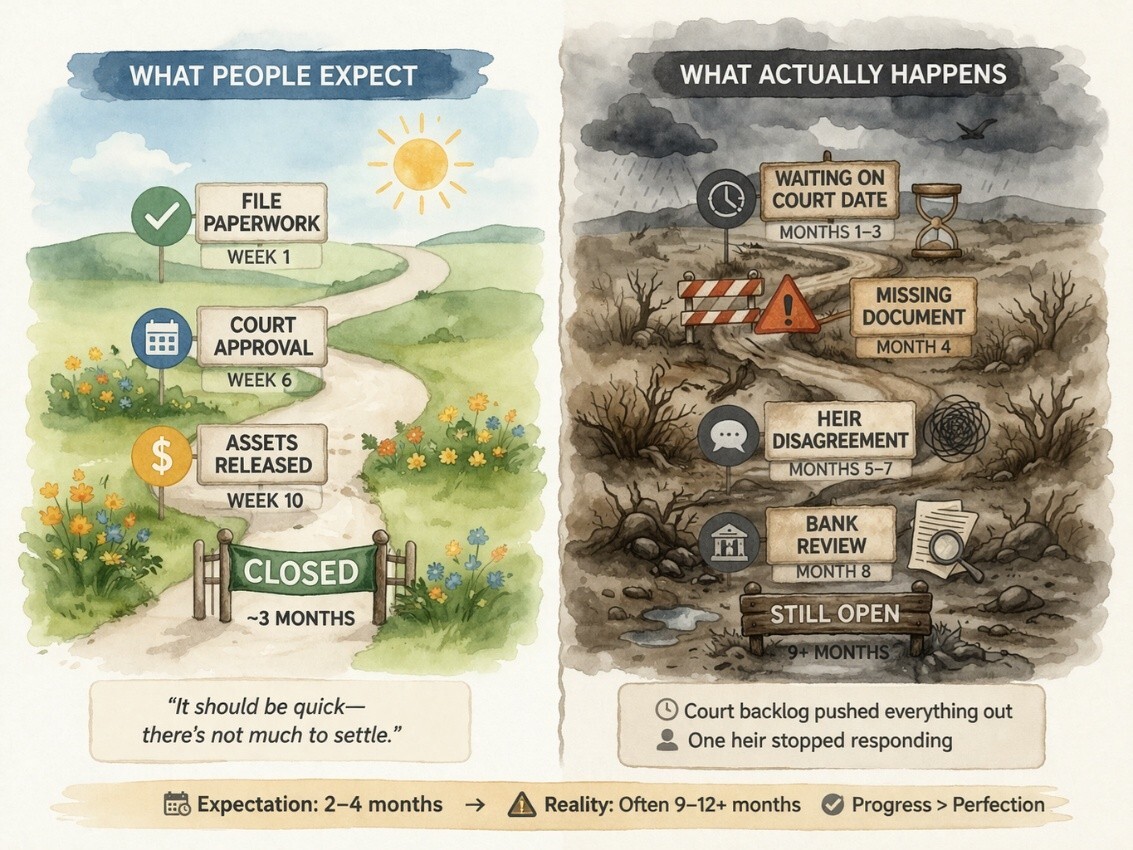
One of the hardest parts of probate work has nothing to do with law, paperwork, or court procedure. It comes from a simple mismatch between how long the process actually takes and how long clients believe it should take. Most families walk into probate expecting movement to happen quickly because everything in the rest of life moves quickly. Bills are paid online in seconds, documents are signed electronically, and answers are usually a search away. When progress slows to the pace of court schedules and legal requirements, anxiety fills the space between expectation and reality.
That space is where panic grows.
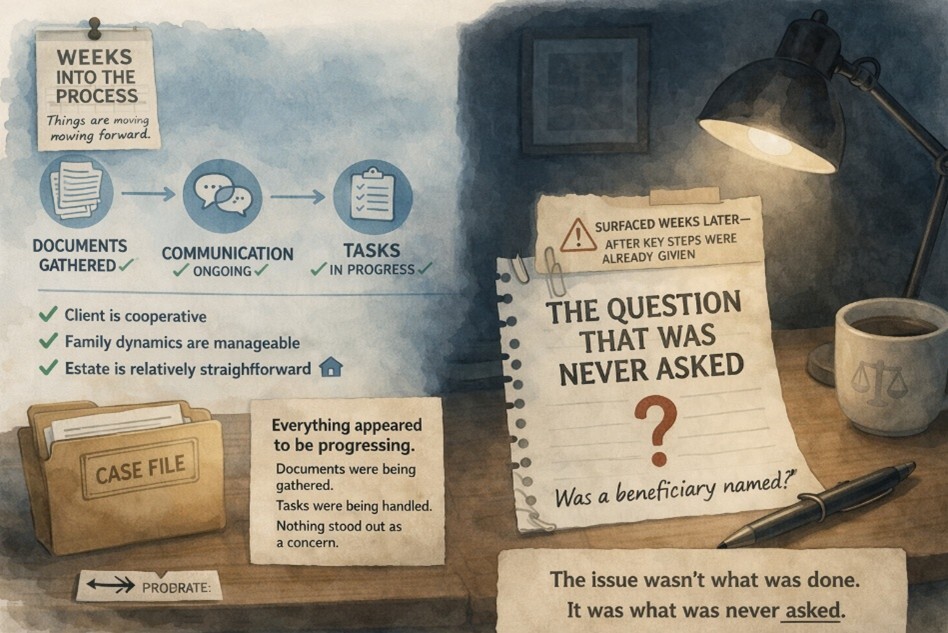
Clients often assume that silence means something is wrong. If they don’t hear updates every few days, they worry that the case is stalled or that they’ve missed something important. Family members begin asking questions, sometimes daily, and the person serving as Fiduciary feels pressure to provide answers they don’t have. By the time they contact the office, the concern has already built into urgency.
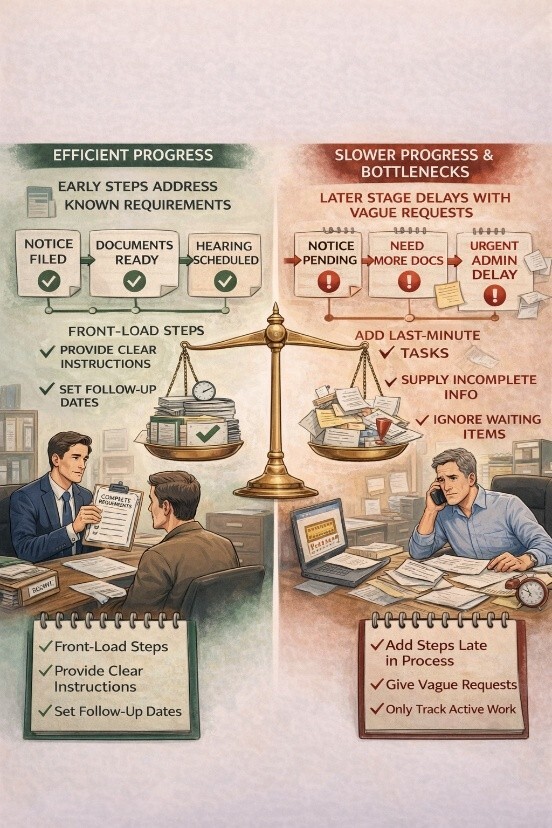
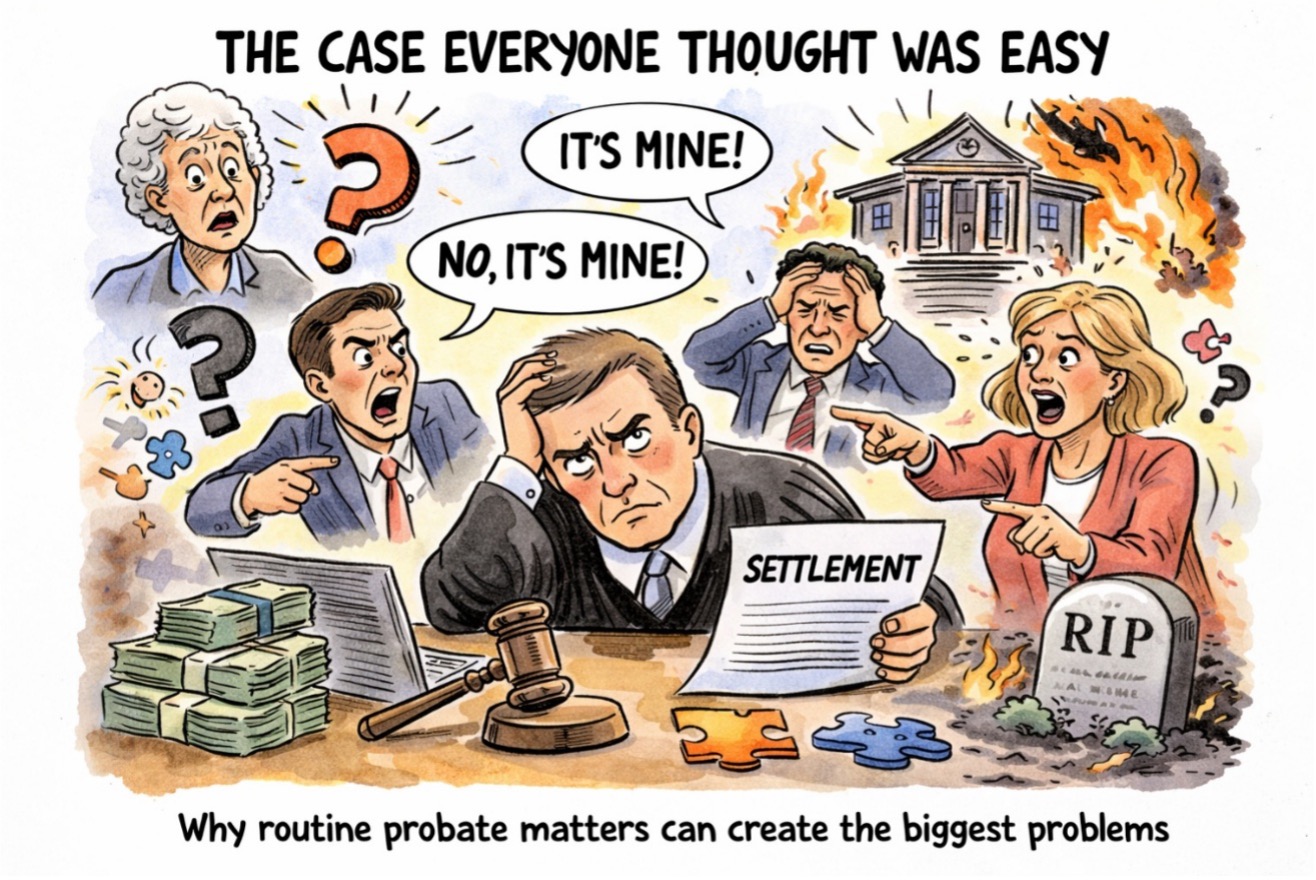
Attorneys and paralegals feel this pressure immediately. A case that was proceeding normally can suddenly feel unstable because the client’s anxiety creates a sense that something must be done right now. In many situations, there’s nothing to fix. The matter is simply waiting on the court, on required notices, or on statutory time periods that can’t be shortened. Explaining that reality doesn’t always calm the situation because waiting feels passive and risky to people who are responsible for an estate.
This is the panic gap: the distance between what clients expect to happen and what can actually happen within the legal system.
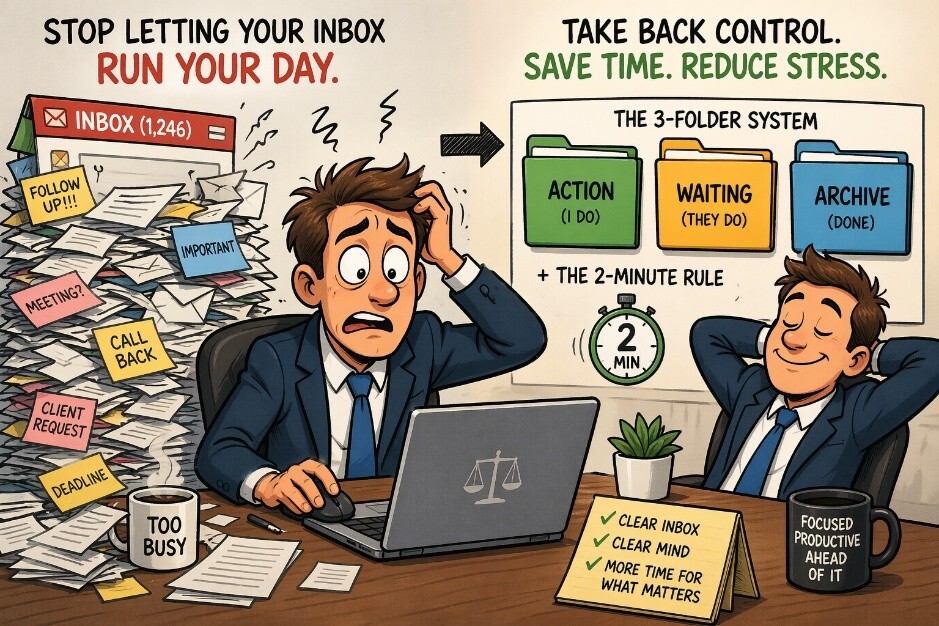
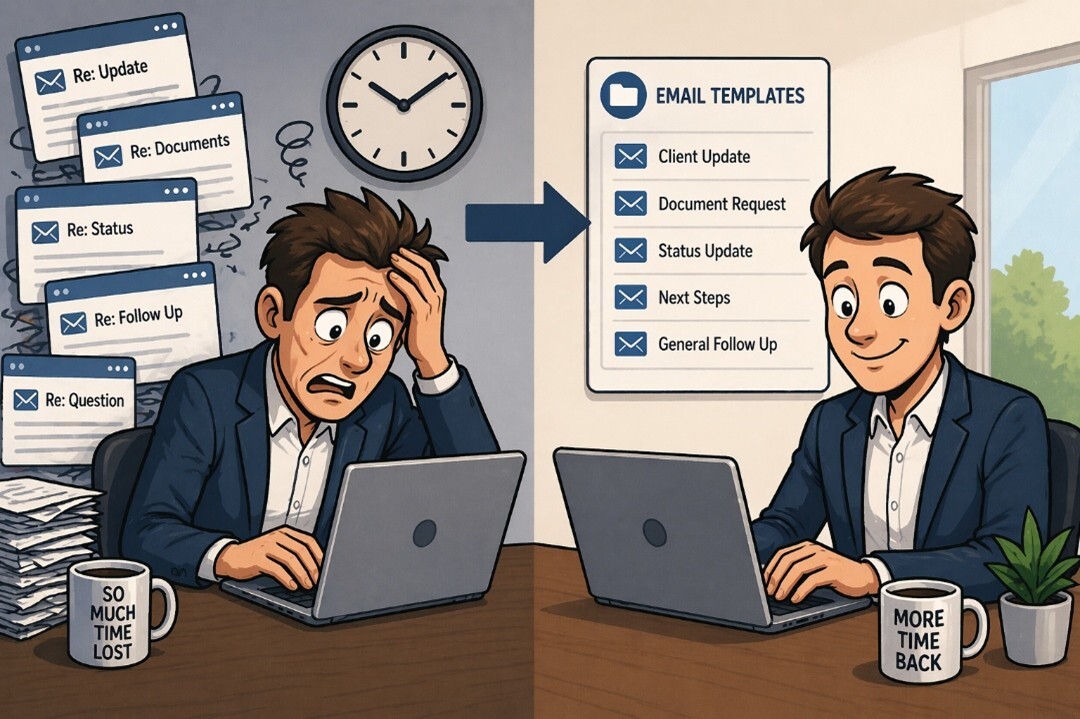
Paralegals often absorb the first wave of this stress because they’re the ones answering calls and emails. They reassure clients that the file is moving, check for updates, and repeat explanations that were already given earlier in the process. Attorneys carry a different form of strain, knowing that the case is on track yet feeling the weight of a client who fears it’s not. Both roles require patience and empathy, even when the timeline is completely outside their control.
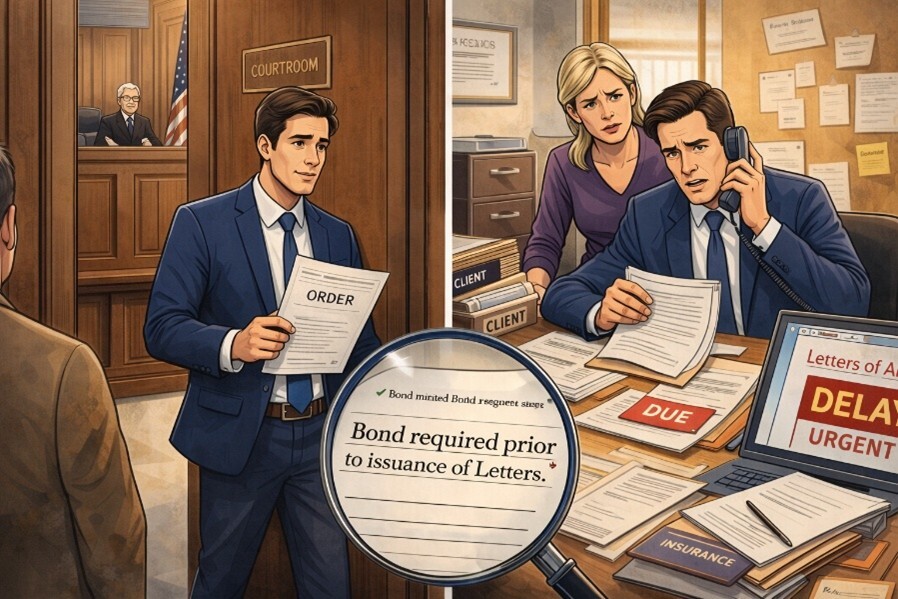
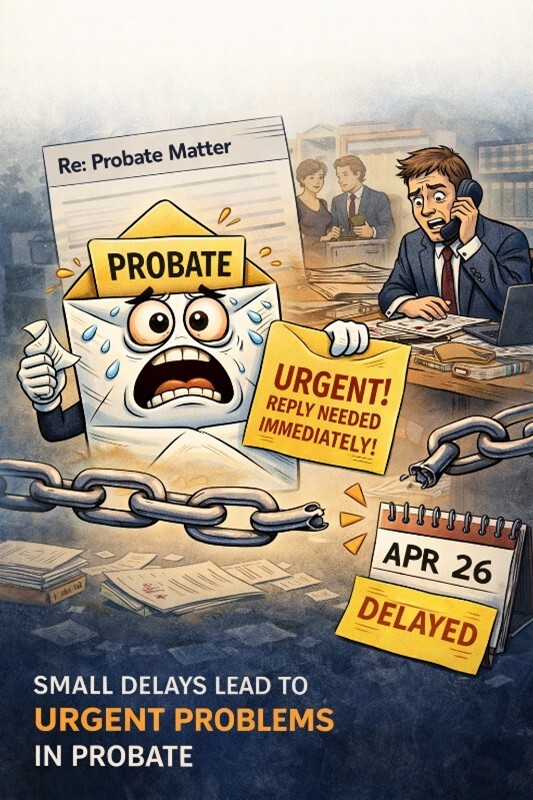
The problem becomes more complicated when the gap suddenly closes. After weeks or months of waiting, a court order arrives, or a required step is completed, and everything needs to happen quickly. Clients who felt powerless before now feel overwhelmed by the amount of action required. What was once silence becomes a rush of decisions, signatures, and coordination. Because they were not prepared for the shift, the new urgency can feel just as stressful as the waiting.
Bonding often appears at this exact moment. It may have been mentioned earlier, but when progress depends on it, the requirement feels immediate and critical. Clients who were anxious about delays now become anxious about speed, worried that any misstep could set the process back again. For the legal team, this creates a narrow window to gather information, answer questions, and keep everything moving without adding confusion.
At Probate Bond Pros, we see this pattern every day. Cases rarely fail because of the bond itself. The strain comes from the timing, when the need for a bond collides with a client who has already been under pressure for weeks or months. When bonding is introduced early as a normal part of the process, families have time to understand what it means and what will be required. When it arrives suddenly, it can feel like one more obstacle in a process that already feels unpredictable.
Closing the panic gap requires setting expectations before anxiety takes hold. When clients understand that probate moves in stages, with periods of waiting followed by periods of activity, they are less likely to interpret silence as danger. They are also better prepared when action is finally required. Clear timelines, even approximate ones, can transform uncertainty into patience because families know what “normal” looks like.
For attorneys and paralegals, this preparation reduces the number of emergency calls that are not true emergencies. It allows the team to focus on real issues instead of managing fear created by misunderstandings. Most importantly, it protects the client from unnecessary distress during an already difficult time.
The work you do already carries enough weight. Managing preventable panic should not have to be part of it. When expectations are aligned with reality, cases feel steadier, communication improves, and families regain a sense of control over a process that can otherwise feel overwhelming.
If you need a bond today and want a process that moves quickly without adding confusion or delay, we are ready to help. Request your bond HERE or call 800-828-2226 and take advantage of our two-hour guarantee.
To your success,
Darren Vermost
The Bond Guy
and the Probate Bond Pros Team