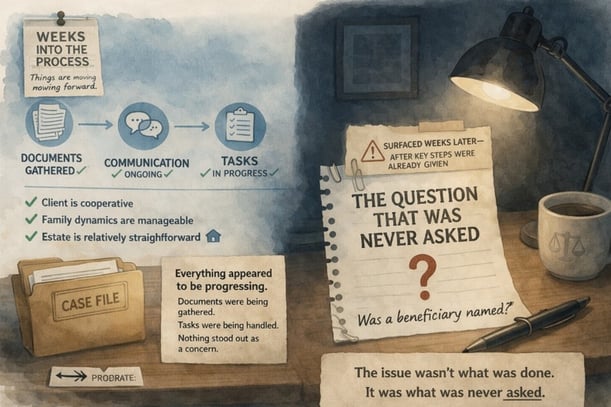
The question came up late, surfacing weeks into the process, at a point where several steps had already been completed, and others were waiting to move forward.
And by then, it mattered a great deal.
The case itself was simple enough. The client was cooperative, the family dynamics were manageable, and the estate was relatively straightforward.
Inside the file, everything appeared to be progressing. Documents were being gathered. Communication was consistent. Tasks were being handled in the order they typically are. Nothing suggested that anything critical had been missed.
The problem was not what had been done. It was what had never been asked.
Early in the process, there had been a brief conversation about the estate’s accounts. The client mentioned a primary checking account and a few smaller ones. Everything sounded clean and easy to track. No one pressed further, because nothing about it raised concern.
What no one asked was this:
“Are any of these accounts restricted, jointly held, or tied to beneficiary designations that might affect how they’re handled?”
It seemed like a small question.
At the time, it didn’t feel necessary to slow things down to explore every variation. The assumption was that if something unusual existed, it would come up naturally as documents were reviewed.
That assumption held, right up until it didn’t.
Weeks later, when the case reached a point where authority and access mattered, one of the accounts turned out to be held in a way that limited immediate control. It required additional documentation, clarification from the institution, and coordination that had not been planned for.
Now the file paused because this had to be resolved before anything else could move forward. What could have been identified early, with plenty of time to address it, had become a gatekeeper.
From the client’s perspective, it felt sudden.
They’d already provided what they believed was complete information. Now they were being asked for additional details, signatures, and clarification, all with a sense that everything depended on it. The shift created uncertainty because they hadn’t been guided to think about that detail earlier.
Inside the office, there was no mistake to correct, no error to fix. Just a missing piece that now needed to be addressed quickly. The team moved to gather information, contact the institution, and keep the case from losing momentum, but the flexibility that existed earlier was gone.
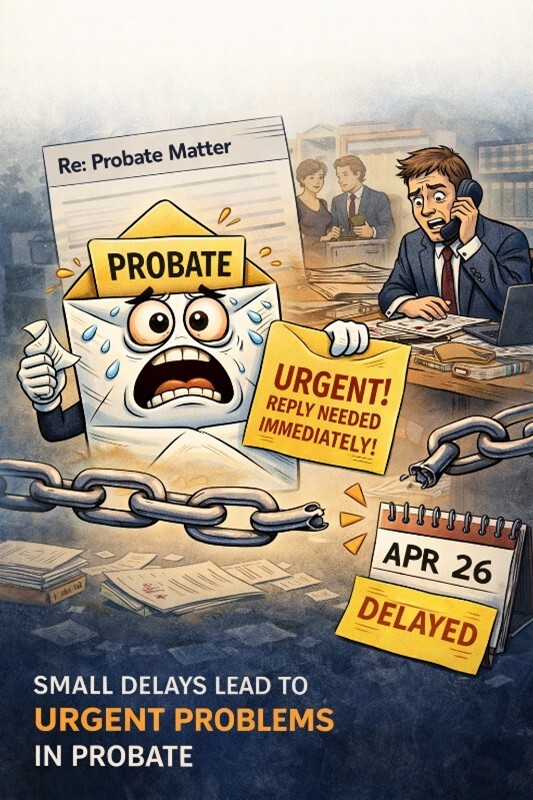
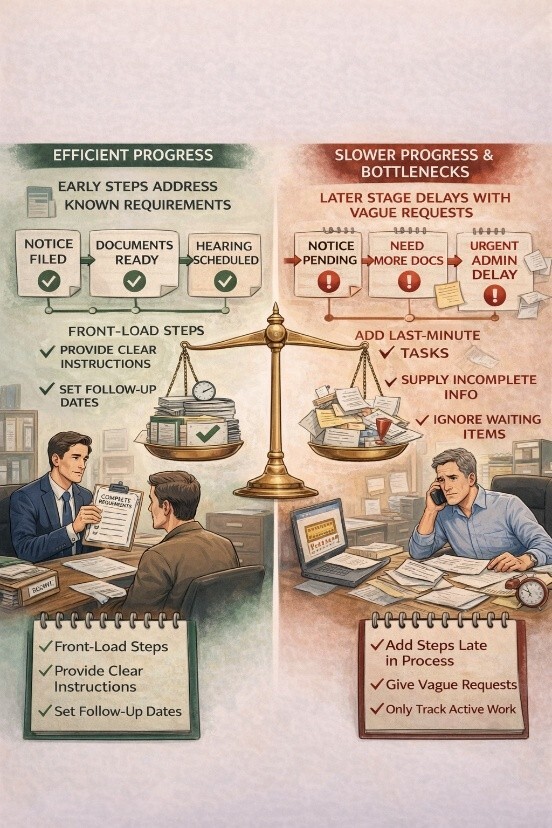
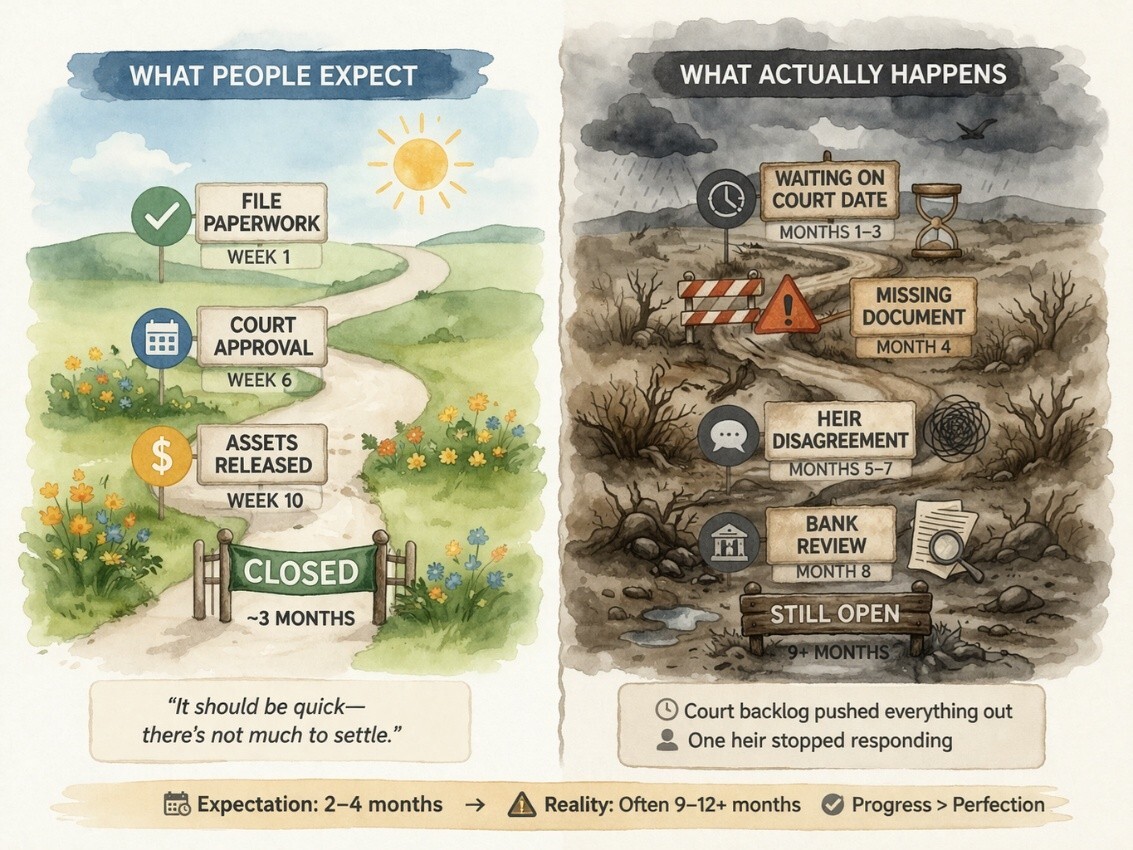
This is how many probate delays actually begin. With small assumptions made early in the process. A question that feels optional at the beginning often becomes essential later. When it’s asked early, it fits naturally into the workflow. When asked late, it interrupts.
Certain parts of a case tend to reveal this pattern more clearly than others.
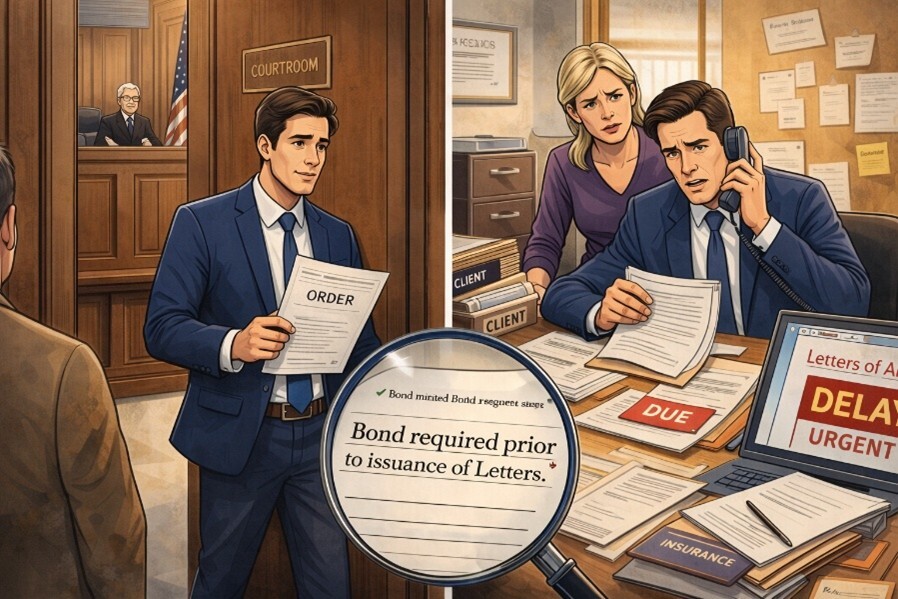
Bonding is often one of them. Understanding what assets exist, how they are held, and what authority is required directly impacts how a bond is structured and when it is needed. When those details are clarified early, bonding moves forward without friction. When they surface later, it can feel like an unexpected hurdle, even though it was always part of the process.
The requirement itself hasn’t changed. Only the timing has.
There are a few simple ways to prevent this kind of situation from developing.
Ask the questions that feel slightly unnecessary, especially early in the process. The details that seem minor are often the ones that shape what happens later.
Take a few extra minutes to understand how assets are titled and controlled, not just what exists. That clarity prevents delays that are otherwise hard to anticipate.
And introduce required steps early enough that they never feel like a surprise.
Strong probate teams are not defined by avoiding problems entirely. They are defined by how early they identify the steps that will matter later and address them while time is still on their side.
At Probate Bond Pros, we work with teams at every stage of the process, but the smoothest cases are always the ones where bonding is introduced early and based on clear information. When that step is handled quickly and without confusion, it allows everything else to move forward the way it should.
If you need a bond today and want a process that moves quickly without adding confusion about next steps, we’re here to help. Request your bond HERE or call 800-828-2226 and take advantage of our two-hour guarantee.
To your success,
Darren Vermost
The Bond Guy
and the Probate Bond Pros Team